
Facelift Surgery Explained
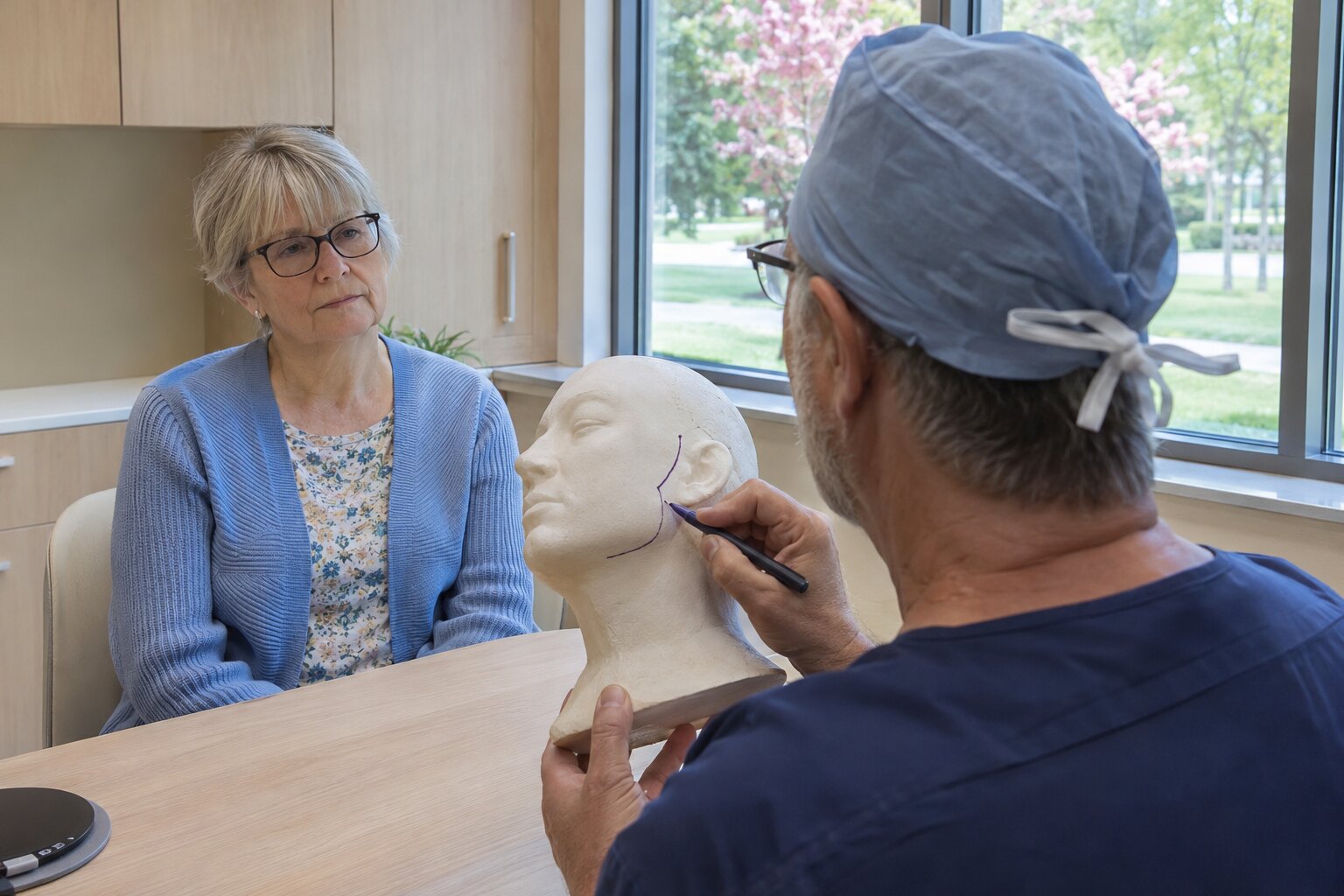
A facelift, also called rhytidectomy, is a surgical procedure that improves visible signs of aging in the face and neck, according to the American Society of Plastic Surgeons. Below is the usual account of the operation, followed by the pages that ask where it fits a complicated life.
The standard advice, and where it gets too tidy
The usual telling of a facelift runs in a straight line: a concern, a surgeon, an operation, a recovery. That is a useful outline, and it is also where most guides stop. The steps of a facelift procedure from the American Society of Plastic Surgeons show where the choices are made, and real plans seldom follow the outline without a detour.
The same organization is clear about the limits of the operation. It says that a facelift, as a restorative surgery, does not change your fundamental appearance and cannot stop the aging process. That limit is a good test for any plan. If your goals ask for more than restoration, the conversation with your surgeon matters more than any general guide.
For a neutral description to read next to this page, the MedlinePlus entry on facelift is a sensible companion.
Four pages, four trade-offs
Each of these pages picks one part of the facelift decision and asks what changes when your circumstances are not standard.
- Brow Lift Basics covers the brow lift and what sets it apart from a facelift, for readers who want both areas considered.
- Who Is a Good Facelift Candidate tests the idea of the ideal candidate against health conditions and realistic goals.
- What Facelift Recovery Involves looks at healing and how it fits around the rest of your life.
- Facelift Risks and Safety weighs risks and safety measures against the circumstances that change them.
If you are unsure who the general advice was written for, the American Society of Plastic Surgeons describes who it considers on its facelift candidates page.
The question to ask when the usual advice stops applying
Bring one question to your consultation: what in my history makes the usual facelift advice fit me less well? A surgeon who knows your history can tell you which rules bend for you and which ones hold. Ask it early, while the plan is still open to change.