
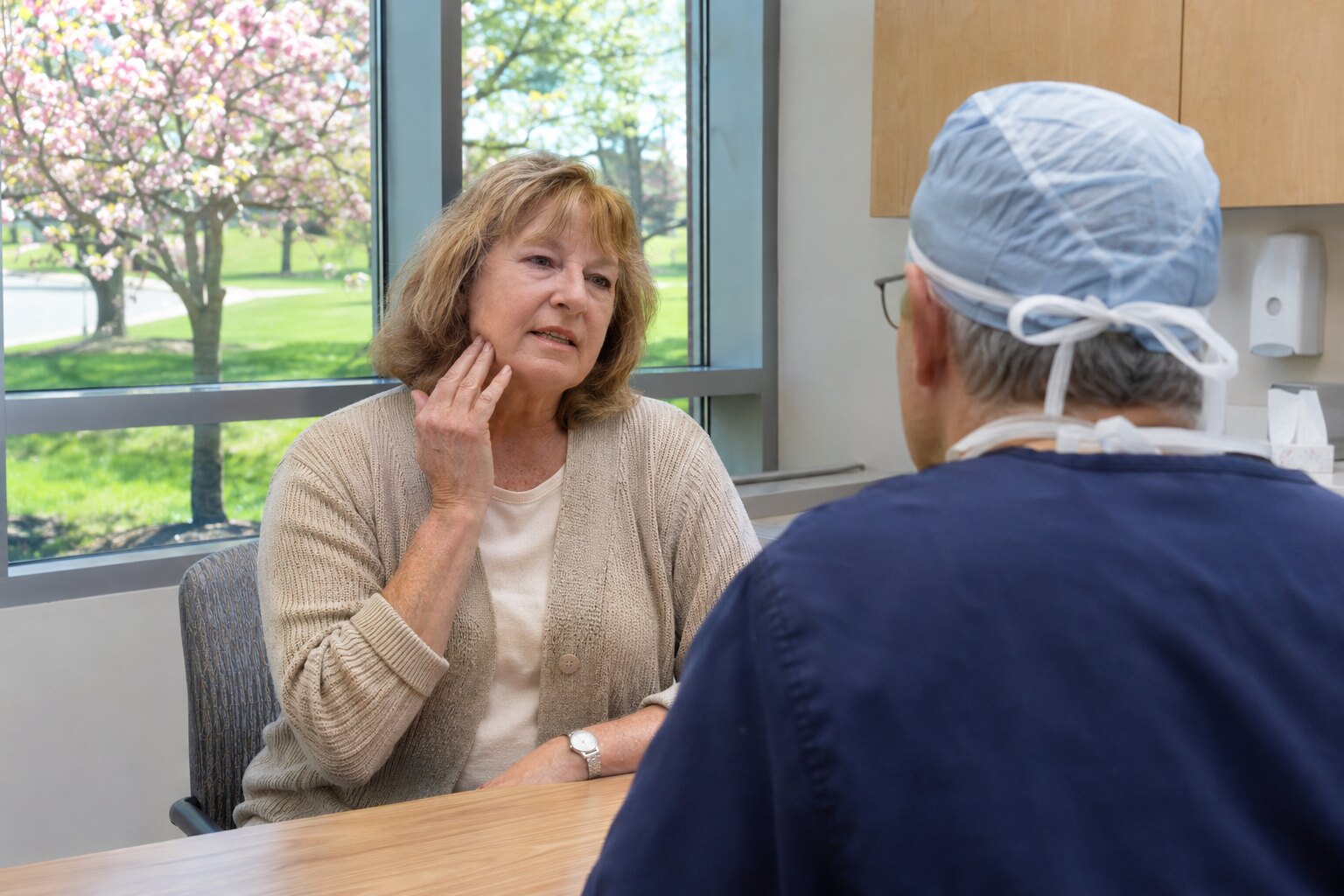
The phrase "good facelift candidate" sounds like a simple test you either pass or fail. This article looks at the published description and asks what it leaves out for someone whose situation is not simple.
What the published description says
The American Society of Plastic Surgeons says that, in general, good candidates for a facelift include healthy individuals who do not have medical conditions that impair healing, nonsmokers, and individuals with a positive outlook and realistic expectations. Its facelift candidates page sets out the full description.
Where the word "healthy" stops being simple
The description starts from a healthy person. You may not be in perfect health but still manage your conditions well. Whether your condition counts as one that impairs healing is not something a general description can decide. That assumption is the one to test first.
What your surgeon weighs
The wording "in general" matters. It marks the list as a starting point, and a surgeon decides how it applies to you. That includes how your conditions are managed and what you expect from the result.
For a neutral outline of the operation, the MedlinePlus entry on facelift is a useful companion. The American Society of Plastic Surgeons also lays out the steps of a facelift procedure, which shows what a candidate goes through.
Stanford Health Care also publishes a page on facelift facial surgery, and reading two descriptions together shows where they agree.
Raise it before the decision
If you are unsure you fit the description, say so at the first consultation. Ask how your health history affects the plan, and what you would need to change, if anything, before surgery makes sense.